
Understanding Gallbladder and Bile Duct Cancer
Gallbladder and bile duct cancers are rare but aggressive cancers affecting the digestive system. They often go undetected in the early stages due to vague symptoms, making timely diagnosis and expert medical care crucial for improving patient outcomes.
Dr. Swapnil Patel, Director of Upkar Cancer Institute, Varanasi, is a leading surgical oncologist with extensive experience in treating these cancers. Previously serving as Associate Professor at Mahamana (Tata) Cancer Institute, Varanasi, Dr. Patel is dedicated to providing cutting-edge treatment for cancer patients in the region.
Symptoms of Gallbladder and Bile Duct Cancer
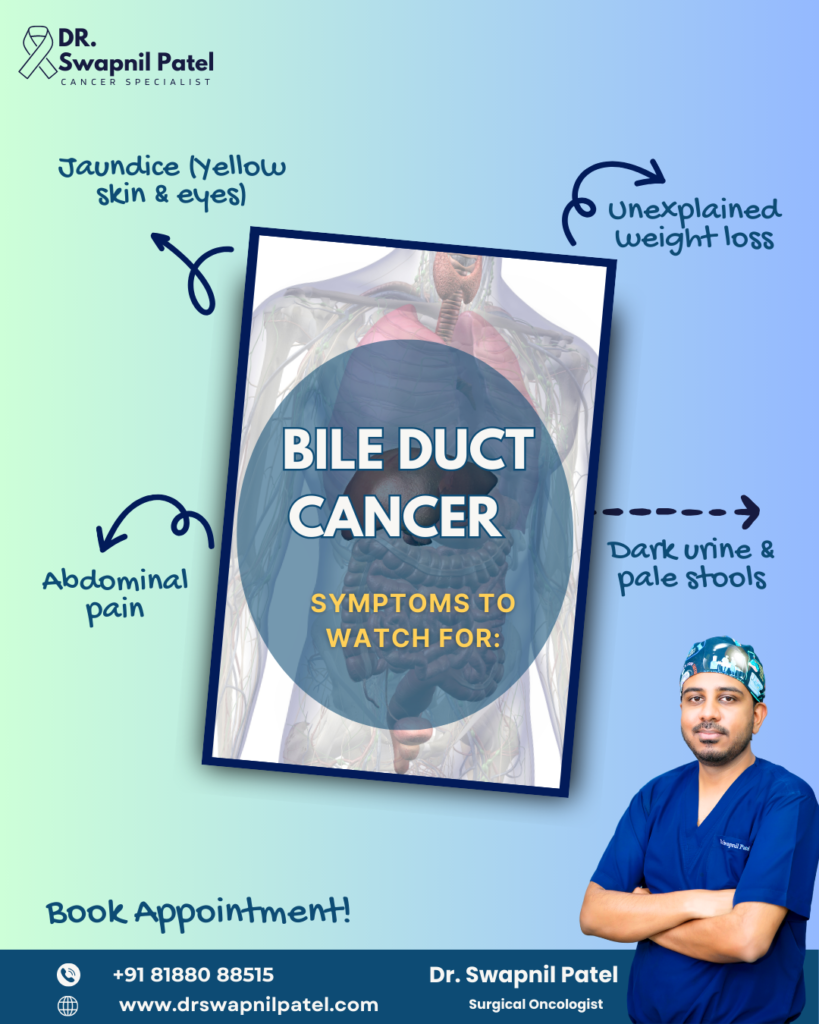
The early signs of gallbladder and bile duct cancer can be subtle, often resembling common digestive issues. However, persistent symptoms should not be ignored. Key symptoms include:
- Jaundice (yellowing of the skin and eyes)
- Abdominal pain (especially in the upper right side)
- Unexplained weight loss
- Loss of appetite
- Nausea and vomiting
- Dark urine and pale stools
- Fever and fatigue
Since these symptoms can overlap with other conditions, it is essential to consult an expert oncologist like Dr. Swapnil Patel for early diagnosis and treatment.
Diagnosis and Staging
Early detection significantly improves treatment outcomes. At Upkar Cancer Institute, state-of-the-art diagnostic methods are employed to assess the cancer stage and plan treatment accordingly. The diagnostic process includes:
- Ultrasound and CT Scan – To identify tumors and check their spread.
- MRI and MRCP (Magnetic Resonance Cholangiopancreatography) – To examine bile ducts and nearby structures.
- Endoscopic Retrograde Cholangiopancreatography (ERCP) – Helps detect blockages in bile ducts.
- Biopsy and Histopathology – Confirms the type and aggressiveness of cancer.
- Tumor Marker Tests – Blood tests to detect abnormal cancer-related markers.
Treatment Options for Gallbladder and Bile Duct Cancer
Treatment depends on the stage of cancer, overall health, and location of the tumor. Dr. Swapnil Patel and his team at Upkar Cancer Institute provide comprehensive, patient-centric care with advanced treatment options.
1. Surgery (Curative Treatment)
- Radical Cholecystectomy – Complete removal of the gallbladder along with affected surrounding tissue.
- Biliary Bypass Surgery – Used if the tumor obstructs bile flow.
- Whipple Procedure – If cancer spreads to nearby organs like the pancreas.
2. Chemotherapy
- Used before surgery (neoadjuvant) to shrink tumors or after surgery (adjuvant) to eliminate remaining cancer cells.
- Common chemotherapy drugs include Gemcitabine, Cisplatin, and Capecitabine.
3. Radiation Therapy
- High-energy rays target cancer cells, often combined with surgery or chemotherapy.
- Advanced techniques like IMRT (Intensity-Modulated Radiation Therapy) minimize damage to healthy tissue.
4. Targeted Therapy & Immunotherapy
- Targeted therapy (like FGFR inhibitors) focuses on specific genetic mutations.
- Immunotherapy (Checkpoint Inhibitors) helps the body’s immune system fight cancer.
5. Palliative Care
For advanced-stage cases, pain management, nutritional support, and stent placement for bile drainage help improve quality of life.
Why Choose Dr. Swapnil Patel for Cancer Treatment?
- Renowned Expertise: Director of Upkar Cancer Institute, Varanasi, and former Associate Professor at Mahamana (Tata) Cancer Institute.
- Advanced Surgical Techniques: Specializes in complex GI and hepatobiliary cancer surgeries.
- Comprehensive Cancer Care: From diagnosis to treatment and follow-up, ensuring a holistic approach.
- Patient-Centric Approach: Individualized treatment plans focusing on patient well-being and long-term recovery.
Gallbladder and bile duct cancers require early detection and expert treatment for better outcomes. If you or your loved one is experiencing any symptoms, consulting Dr. Swapnil Patel at Upkar Cancer Institute, Varanasi, can make a significant difference.
For consultations, appointments, or further information, reach out to Upkar Cancer Institute and take the first step toward expert cancer care.