
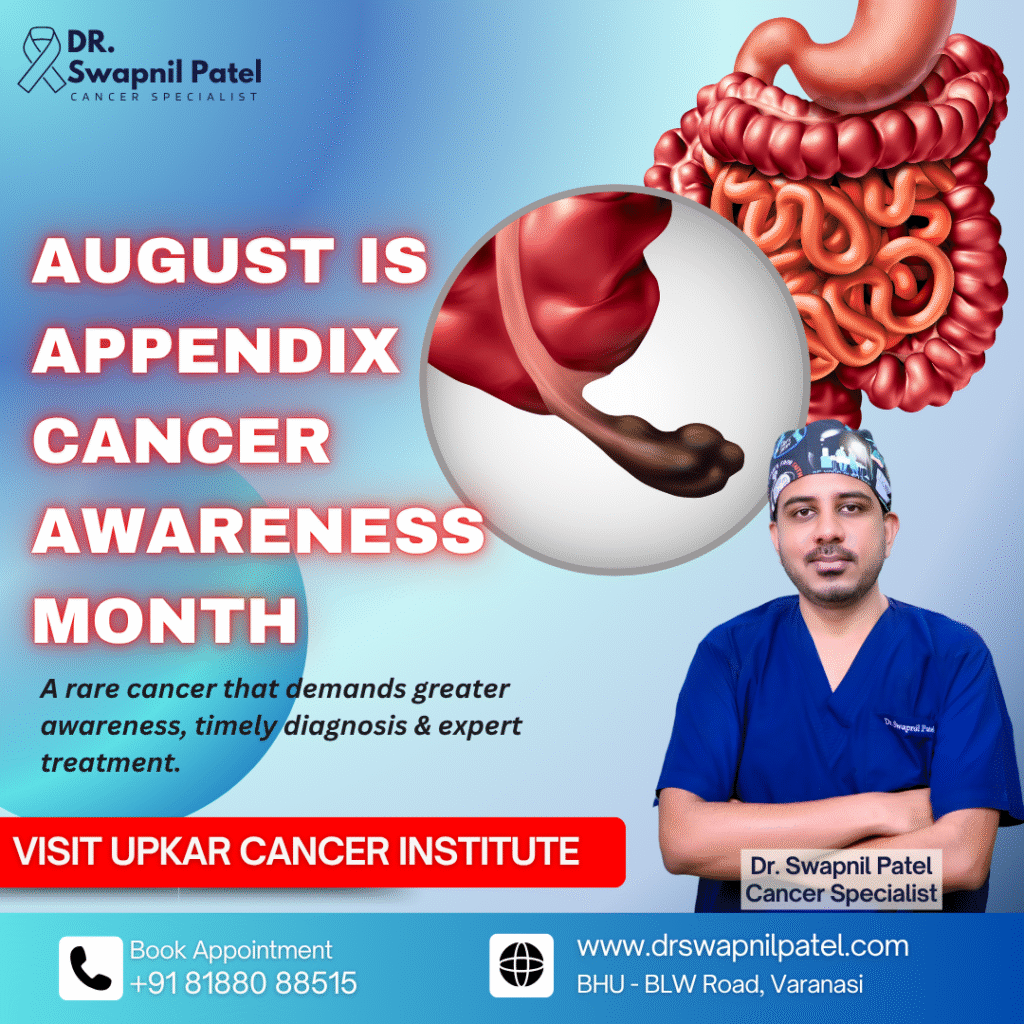
August – Shining a Light on a Rare Cancer
Every August, the medical community observes Appendix Cancer Awareness Month to spread knowledge about one of the rarest cancers affecting the human body. With only 1 to 2 cases per million people each year, appendix cancer often goes unnoticed until it’s in an advanced stage. Awareness campaigns during this month focus on educating the public about symptoms, risk factors, and the importance of timely diagnosis—because the sooner it’s detected, the better the chances of effective treatment.
At Upkar Cancer Institute, Varanasi, Dr. Swapnil Patel is committed to not only treating appendix cancer but also raising public awareness so more patients can be diagnosed early.
What is Appendix Cancer?
Appendix cancer, also called appendiceal cancer, occurs when healthy cells in the appendix mutate and grow uncontrollably, forming a tumor. The appendix is a small pouch attached to the large intestine. While its exact function is debated—some believe it supports immunity, others see it as a vestigial organ—when cancer strikes, it can pose serious health risks.
Small tumors may remain localized, but aggressive or larger ones can spread to the abdominal lining (peritoneum) or other organs, making early detection crucial.
Types of Appendix Cancer
There are several types, each with unique characteristics:
- Appendiceal Adenocarcinoma: The most common type, starting in glandular tissue. Subtypes include mucinous adenocarcinoma (producing mucus), colonic-type adenocarcinoma (similar to colon cancer), and aggressive variants like signet ring cell adenocarcinoma.
- Goblet Cell Adenocarcinoma: Rare, with features of both adenocarcinoma and neuroendocrine tumors.
- Neuroendocrine Tumors (NETs): Often slow-growing, more common in women, and sometimes found accidentally during surgery for appendicitis.
Why Symptoms Are Often Missed
Appendix cancer can be silent in its early stages. When symptoms appear, they often mimic more common conditions like appendicitis, ovarian cysts, or irritable bowel syndrome.
Patients may notice:
- Persistent abdominal or pelvic pain
- Unexplained bloating or swelling
- Sudden increase in waist size
- Changes in bowel habits (diarrhea or constipation)
- Nausea or vomiting
- Feeling full quickly after eating
In some cases, the disease causes Pseudomyxoma Peritonei (PMP), where mucin fills the abdomen, causing visible distension.
Who is at Risk?
While anyone can develop appendix cancer, certain factors increase the risk:
- Age between 40–60 years
- Female gender (especially for NETs)
- Smoking and tobacco use
- Family history of certain cancers
- Medical conditions like pernicious anemia or atrophic gastritis
Diagnosis – How It’s Found
Many cases are discovered unexpectedly during appendectomy surgery. If suspected, doctors may recommend:
- CT or MRI scans to detect tumors and spread
- Laparoscopy for direct abdominal inspection
- Biopsy to confirm cancer type
- Blood tests to assess tumor markers and organ function
Stages of Appendix Cancer
Staging determines treatment and prognosis:
- Stage I & II: Localized cancer
- Stage III: Spread to nearby lymph nodes
- Stage IV: Spread to distant organs or peritoneum
Treatment Options at Upkar Cancer Institute, Varanasi
Dr. Swapnil Patel offers advanced, patient-focused treatments:
- Surgery: Appendectomy for small tumors, hemicolectomy for larger ones.
- Cytoreductive Surgery with HIPEC: Removes visible tumors and delivers heated chemotherapy directly into the abdominal cavity to target remaining cancer cells.
- Systemic Chemotherapy & Targeted Therapy: For advanced or aggressive cancers, to destroy or slow the growth of cancer cells.
Hope with Early Care
Survival rates vary by tumor type and stage. Low-grade neuroendocrine tumors have 5-year survival rates up to 97%, while aggressive cancers may have lower outcomes. Modern approaches like HIPEC have significantly improved results for advanced cases.
The Importance of Awareness
Appendix Cancer Awareness Month in August is more than just a calendar event—it’s a reminder that rare cancers require both public attention and specialized expertise. Knowing the symptoms and seeking prompt evaluation can save lives.
Why Choose Dr. Swapnil Patel in Varanasi
- Over 10 years of expertise in surgical oncology
- Specialist in complex abdominal cancers and HIPEC procedures
- Experience at Tata Cancer Institute, Mumbai and Varanasi
- Compassionate, patient-first approach
- Access to advanced surgical and diagnostic technology at Upkar Cancer Institute
Appendix cancer is rare, but with awareness, early detection, and expert care, outcomes can be greatly improved. If you or a loved one is experiencing unexplained abdominal symptoms, don’t delay—consult a specialist.
This August, let’s spread the word about appendix cancer. Awareness is the first step towards saving lives.