
Breast cancer is one of the most common cancers affecting women across the world, including India. However, with early detection, timely diagnosis, and proper treatment, breast cancer is highly treatable. Breast Cancer Awareness Month, observed every October, serves as a reminder for women to prioritize their breast health and understand the importance of screening and awareness.
At Upkar Cancer Institute, Varanasi, we are dedicated to spreading awareness, providing compassionate care, and offering advanced cancer treatment options under the guidance of Dr. Swapnil Patel, a leading Surgical Oncologist in Varanasi.
What is Breast Cancer?
Breast cancer occurs when cells in the breast begin to grow uncontrollably, forming a tumor. These cancerous cells can spread to surrounding tissues and other parts of the body if not treated in time. While breast cancer primarily affects women, men can develop it as well, though in much smaller numbers.
Common Signs and Symptoms of Breast Cancer
Being aware of any changes in your breast is the first step in early detection. Some signs to look out for include:
- A lump or thickening in the breast or underarm area
- Changes in breast size, shape, or appearance
- Dimpling or puckering of the breast skin
- Nipple discharge, especially if bloody
- Pain in the breast or nipple that doesn’t go away
- Redness or swelling of the breast
If you notice any of these symptoms, consult a specialist immediately. Not every lump is cancerous, but it’s always safer to get it evaluated.
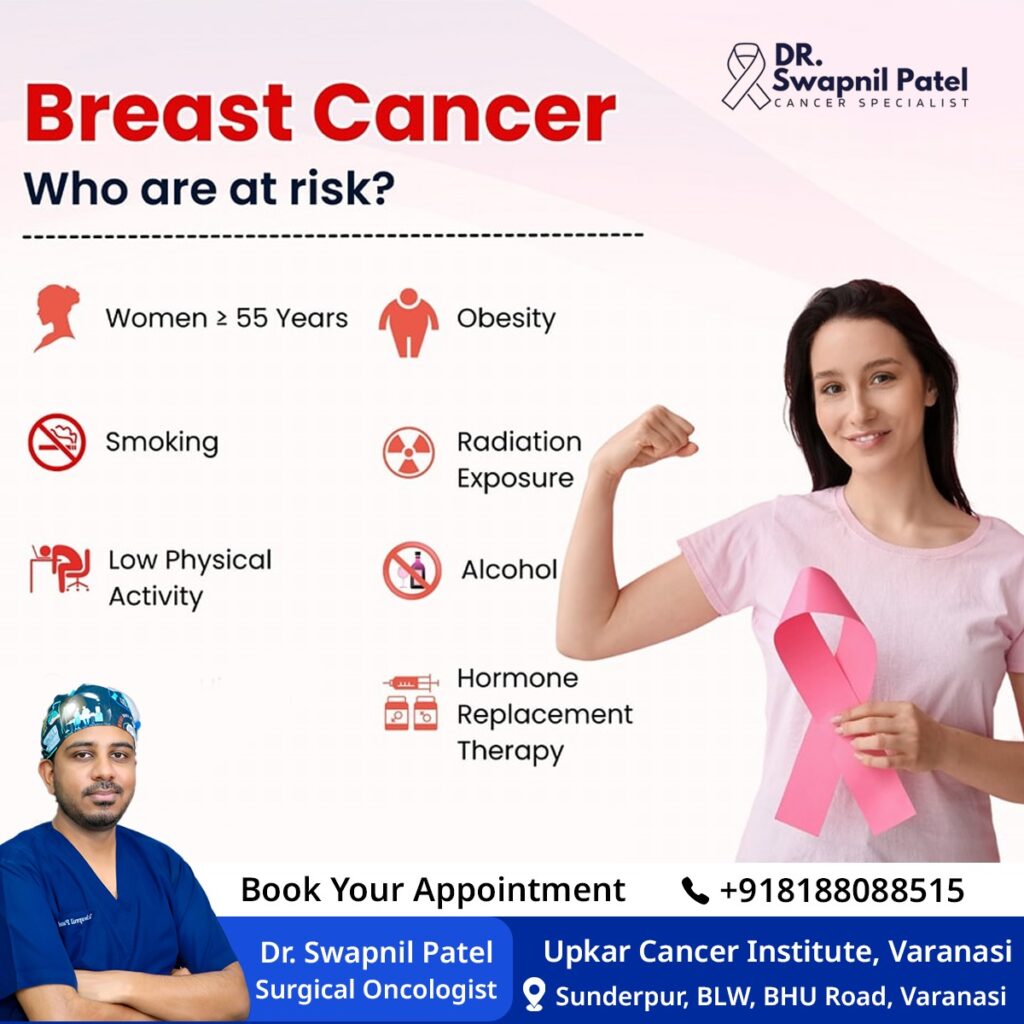
Who is at Risk?
While breast cancer can affect anyone, certain factors increase the risk:
- Family history of breast or ovarian cancer
- Genetic mutations such as BRCA1 or BRCA2
- Early onset of menstruation or late menopause
- Obesity and sedentary lifestyle
- Excessive alcohol consumption
- Increasing age
Understanding your risk can help you take preventive measures and stay alert.
Importance of Early Detection
Early detection is the strongest weapon against breast cancer. When detected in early stages, the chances of successful treatment and full recovery increase significantly.
| Screening Method | Recommended For | Frequency |
|---|---|---|
| Self-Breast Examination | Women above 20 years | Monthly |
| Clinical Breast Examination | Women above 40 years | Once a year |
| Mammography | Women above 40 years / High-risk women | Every 1-2 years |
Women with a family history or genetic risk may require earlier and more frequent screening.
Treatment Options Available at Upkar Cancer Institute, Varanasi
Breast cancer treatment is personalized based on the stage, type, and overall health condition of the patient. At Upkar Cancer Institute, we provide comprehensive and advanced treatment options, including:
- Breast-Conserving Surgery (Lumpectomy)
- Mastectomy
- Breast Reconstruction
- Chemotherapy
- Targeted Therapy
- Hormone Therapy
- Immunotherapy
- Radiation Therapy
Dr. Swapnil Patel specializes in organ-preserving surgeries and ensures that treatment focuses not only on removing cancer but also on maintaining the patient’s physical and emotional well-being.
Lifestyle Habits to Reduce Risk
While not all causes are preventable, adopting a healthy lifestyle can significantly lower the risk:
- Maintain a healthy weight
- Eat a balanced and nutritious diet
- Engage in regular physical exercise
- Limit alcohol intake
- Avoid smoking
- Breastfeed if possible — it has a protective effect
- Stay mindful of hormonal medications and consult before use
Small changes today can create long-term health benefits.
Why Choose Dr. Swapnil Patel and Upkar Cancer Institute?
- Expert Surgical Oncologist with years of experience
- Advanced surgical and treatment facilities
- Patient-centered, compassionate care
- Comprehensive diagnostics under one roof
- Holistic support for patients and families
We believe that knowledge, awareness, and timely action are key to defeating cancer.
Breast Cancer Awareness Month is not just about wearing a pink ribbon — it’s about taking action. Every woman should stay aware of her breast health, understand risk factors, and schedule regular screenings.
If you have any concerns or need guidance, do not hesitate to consult a specialist.